A three-headphone display with interactive requirements
The source record describes a three-headphone display set with multiple channel versions. The differences include headphones, hook decals, bottom graphics and an audio/video player.
When a display fixture must address product retention, interactive media, channel variants and transport protection together, the engineering path has to connect the drawing, assembly and packout instructions.
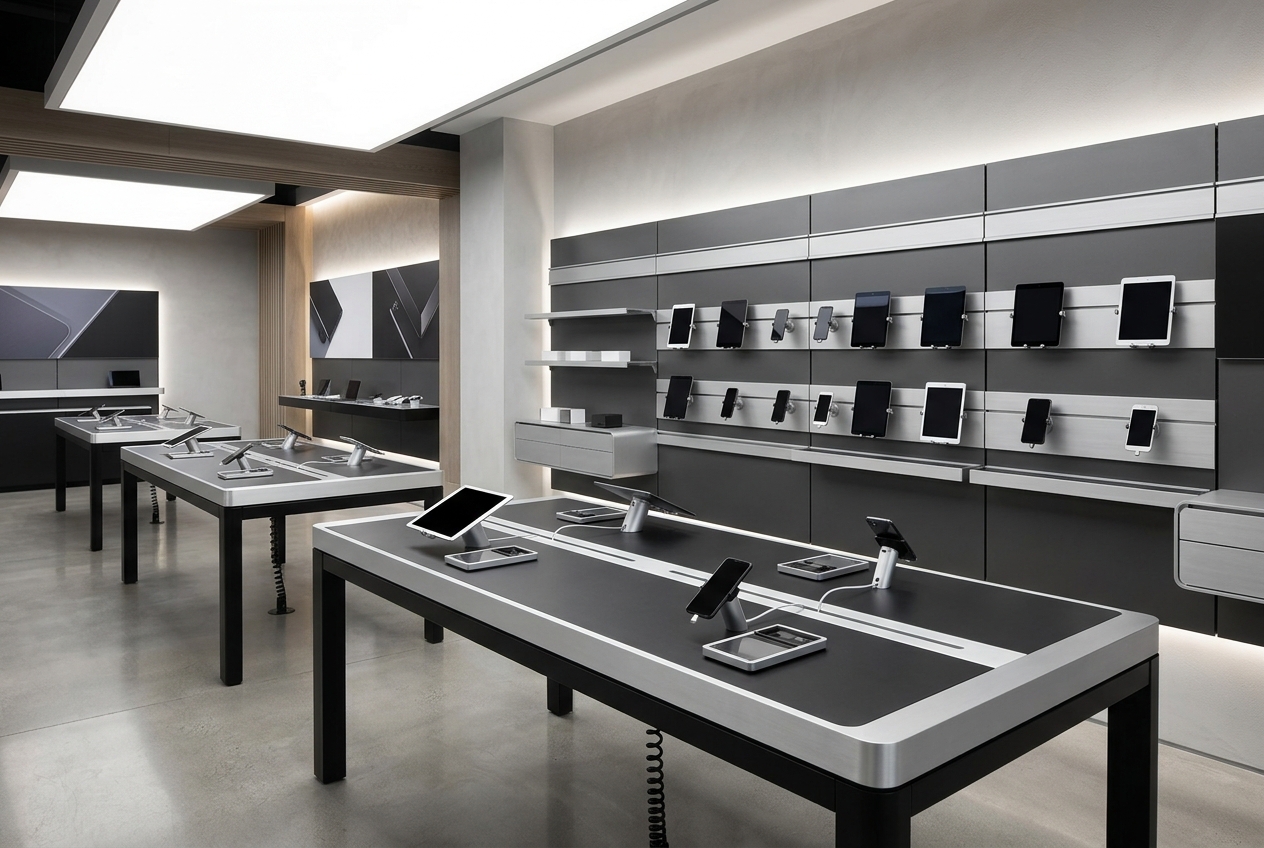
The source record describes a three-headphone display set with multiple channel versions. The differences include headphones, hook decals, bottom graphics and an audio/video player.
The project files include customer drawings, part numbers, a vacuum-formed housing, metal support plates, graphics, push buttons, an audio/video player and hook assemblies. Formal contract scope is not public.
The packout documents list top and bottom fillers, an outer shipper, a flanged tube and protection steps for the display, power cord, metal bracket, screw pack and instruction sheet.
The in-plant assembly instructions cover riveting, graphic placement, button and player installation, power-cable retention and the connection of the display housing to its support components.
The value of this type of project is not only the appearance. It is the engineering communication that connects the displayed product, component list, assembly sequence and transport protection.
The public page withholds the client name, brand, formal order quantity, lead time, destination, current SKU, test standard and unapproved ownership claims. Historical drawings and documents are project evidence, not current catalogue specifications.
The source supports engineering documents and assembly / packout preparation. These are documented deliverable types, not a public claim of completed shipment.
Customer drawings, project number 11-37607, part numbers and the display-set BOM support review of the relationship between the housing, supports and accessories.
The engineering files record a vacuum-formed housing, metal supports, graphics, buttons, an audio/video player and hook assemblies as an integrated direction.
The assembly documents organize riveting, graphic application, player and button installation, power-cable fixing, and housing-to-support assembly into repeatable steps.
The packout records identify fillers, carton, sleeve, display body, metal brackets, screw pack and instructions in the packing configuration for transport-protection review.
These are source-supported engineering deliverable types. Formal contract scope, order quantity, lead time, destination, actual shipment and installation outcome require project confirmation.
The source includes final packout configuration, fillers, carton, sleeve and protection steps used to review the transport-protection direction.
The source includes engineering records for display-set parts, display housing, metal supports, buttons, media player and hook assemblies.
The source includes riveting, graphic application, button and player installation, power-cable fixing, and housing-to-support assembly steps.
These records support traceability of the engineering, assembly and packout scope; client name, order quantity, lead time and formal commercial delivery outcome are not published.
The source records a three-headphone display set with multiple channel versions. Differences include the displayed headphones, hook decals, bottom graphics, and an audio/video player; client name and formal contract scope are not public.
Verifiable engineering directions include a vacuum-formed housing, metal supports, background graphics, buttons, an audio/video player, and hook assemblies, mapped through customer drawings, part numbers, and a BOM.
The sources support display structure, part mapping, riveting and installation steps, power-cable retention, plant assembly instructions, and Packout and transport-protection records. They are not extended into a claim for all manufacturing or site responsibility.
Packout records identify fillers, carton, sleeve, display body, metal brackets, screw pack, and instructions. Assembly documents cover graphic placement, button and player installation, riveting, and housing-to-support assembly.
Public materials do not confirm order quantity, MOQ, lead time, destination, or formal shipment result. The three-headphone configuration is not treated as a universal quantity or commercial promise.
This is an anonymous engineering, assembly, and packing-preparation record useful for evaluating display structure and engineering communication. It is not presented as an approved client delivery or completed-shipment case.
For an interactive display review, share the displayed product, dimensions, retention method, channel versions, quantity, media needs, packing conditions, and schedule, together with any drawings or photos.
It is published as an anonymous engineering record. The sources support customer drawings, display structure, packing and assembly documentation; the public page does not claim the customer name, order quantity, lead time or formal delivery result.
We can evaluate the display item, dimensions, retention method and channel conditions, then determine whether structure, parts, samples, assembly instructions or packing protection should come first. Final responsibility is project-specific.
Share the displayed product, dimensions, quantity, channel context, interactive-media needs, packing conditions and target schedule, together with any drawings or photos.
Share the displayed product, dimensions, channel versions, quantity and schedule so we can decide whether drawings, samples, structure or packing should come first.
Submit a display-fixture inquiry